Insight Vision Center hero background

Love
the Way
you see

Family enjoying clear vision outdoors

Service Hours

  • Mon 8:00 AM – 7:00 PM
  • Tue 8:00 AM – 7:00 PM
  • Wed 8:00 AM – 7:00 PM
  • Thu 9:30 AM – 7:00 PM
  • Fri 8:00 AM – 7:00 PM
  • Sat – Sun Closed

Our Doctors

LECTURES

Dry Eye, Scleral Lenses, and Myopia Management

CLINICAL RESEARCH

Myopia Management

UNDERGRADUATE

University of California, Santa Barbara

OPTOMETRY SCHOOL

Marshall B. Ketchum University

Primary Care, Scleral Lenses, Advanced Contacts for Irregular Cornea, Myopia Management, Dry Eye

Dr. Nhi earned her Doctorate of Optometry magna cum laude from the Southern California College of Optometry. She has built her practice around three areas where patients often struggle: dry eye disease, scleral and specialty contact lenses, and slowing the progression of nearsightedness in children.

Having worn glasses and contact lenses since age 11, Dr. Nhi understands firsthand the frustration that comes with unclear or uncomfortable vision. She has published research on prosthetic lenses for iris conditions and regularly lectures to fellow eye care providers on myopia management and advanced contact lens care.

Portrait of Dr. Nhi Nguyen

More Videos of Dr. Nhi

Nhi Nguyen video

New Hope for Dry Eye Sufferers

Xiidra vs Restasis Quick Fix or Steady Dry Eye Relief?

Are you tired of battling dry eyes every day? You're not alone

FELLOWSHIPS

Scleral Lens Education Society and British Contact Lens Association

LEADERSHIP

Co-founded the International Congress of Scleral Contacts

COMMUNITY

Founder of Scleral Lens Practitioners Group

OPTOMETRY SCHOOL

Nova Southeastern University

Scleral Lenses, Advanced Contacts for Irregular Corneas

After witnessing his grandfather suffer from an incurable eye disease, Dr. Schramm made it his life's work to help people with complex corneal conditions. He holds prestigious fellowships from both the Scleral Lens Education Society and the British Contact Lens Association and co-founded the International Congress of Scleral Contacts. An internationally recognized leader in specialty contact lenses, Dr. Schramm has educated thousands of doctors worldwide and published extensively in the field.

Portrait of Dr. Nhi Nguyen

More Videos of Dr. Nathan Schramm

Dr. Nathan Schramm Thumbnail

Struggling with Blurry Vision or Glare at Night? This Lens Could Change Everything

Preventing Foggy Scleral Lenses with Smart Solutions by Dr. Nathan Schramm

Fixing Blurry Vision: How Pentacam Imaging Tracks Corneal Dystrophy by Dr. Schramm

LECTURES

Dry Eye, Vision Therapy, and Myopia Management

CLINICAL RESEARCH

Orthokeratology

UNDERGRADUATE

University of California, San Diego

OPTOMETRY SCHOOL

Marshall B. Ketchum University

Primary Eye Care, Contact Lenses, Myopia Management, Vision Therapy, Medical Eye Services

Dr. Chen understands the challenges of poor vision firsthand, having managed high nearsightedness and retinal health concerns since childhood. Her personal experience fuels her commitment to myopia management and vision therapy, where she helps patients protect their long term eye health and restore visual function. In addition to patient care, Dr. Chen contributes to the advancement of the field as a clinical researcher for the Euclid Phoenix orthokeratology trials, helping shape the future of myopia treatment.

Portrait of Dr. Nhi Nguyen

More Videos of Dr. Chen

Dr. Ariel Chen Thumbnail

Kids Vision Boost 3 Must-Have Tips for Screen Breaks Outdoor Play

Struggling with Concussion Vision? See How Vision Therapy Restores Clarity

Esotropia vs Exotropia Understand Your Eye Turns and Stop Double Vision

FELLOWSHIP

Scleral Lens Education Society

LECTURES

Myopia Management
and Scleral Lenses

CLINICAL RESEARCH

Myopia Management
and Scleral Lenses

ADJUNCT PROFESSOR

Marshall B.
Ketchum University

Scleral Lenses, Keratoconus & Irregular Corneas, Advanced Contact Lenses,
Myopia Management, Ocular Surface Disease (Dry Eye)

After experiencing nearsightedness as a child, Dr. Mai set out to help young patients avoid the cycle of stronger prescriptions year after year. Today, he focuses on slowing myopia progression in children and treating complex corneal conditions with custom scleral lenses. Beyond the clinic, Dr. Mai teaches future optometrists at the Southern California College of Optometry, lectures nationally on advancements in eye care, and serves on multiple advisory boards, with a primary focus on myopia management.

Portrait of Dr. Nhi Nguyen

More Videos of Dr. Mai

Dr. Thanh thumbnail

7 Proven Ways to Prevent Cataracts Naturally (Doctor-Recommended!)

Keratoconus Cross-Linking: Benefits & Risks of Waiting Dr. Thanh Mai

3 Ways To Treat Myopia (Nearsightedness) | Dr. Thanh Mai

FELLOWSHIP

American Academy of Optometry and Optometric Vision Development and Rehabilitation Association

LECTURES

Vision Therapy and Myopia Management

CLINICAL RESEARCH

Myopia Management

OPTOMETRY SCHOOL

Marshall B. Ketchum University

Vision Therapy, Pediatric Vision, Traumatic Brain Injury, Myopia Management, Dry Eye

Dr. Lam is a dual Fellow of the American Academy of Optometry and the Optometric Vision Development & Rehabilitation Association. Her advanced training supports her specialized work with complex vision conditions in both children and adults, including neurodevelopmental disorders and vision problems related to traumatic brain injury. Known for her ability to build meaningful connections with neurodivergent patients, Dr. Lam creates a supportive, individualized care experience for every person she serves. She also lectures to fellow doctors and actively volunteers her time in support of the community.

Portrait of Dr. Nhi Nguyen

More Videos of Dr. Lam

From Double Vision to an Eye Doctor on a Mission to Transform Lives in OC

Discover Vision Therapy for Lazy Eye: Non-Surgical Solutions for Amblyopia and Strabismus!

Strabismus or Amblyopia Treatment: Improve Alignment & Function With Vision Therapy

How to Improve Sequential Memory with Vision Therapy

Bright Eyes, Bright Future

With our top-notch optometry services and innovative treatments, the outstanding vision you dreamed about is well within your reach.

Young girl smiling after eye exam
Child at eye exam

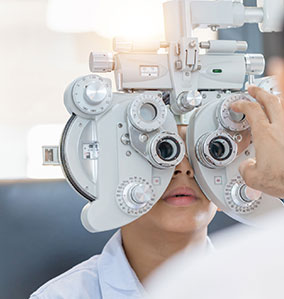
What Is a Pediatric Eye Exam?

A comprehensive pediatric eye exam evaluates how well your child's eyes work together, track, focus, and develop, going far beyond a basic vision screening.

Ellipse Why Pediatric Eye Exams Matter

Children often do not realize they have a vision problem because they assume everyone sees the way they do. Many conditions such as amblyopia, strabismus, and convergence insufficiency are not detected by standard school screenings. The American Optometric Association recommends children receive their first eye exam at 6 months of age, again at age 3, and before starting first grade.

Ellipse Our Kid-Friendly Office

At Insight Vision Optometry, Costa Mesa, our family-friendly office is designed with children in mind, featuring a dedicated children's exam room, kids' optical, and a prize desk to make every visit a positive experience.

What Is Myopia?

Myopia, commonly known as nearsightedness, causes distant objects to appear blurry while close-up vision remains clear and is one of the fastest-growing vision conditions among children.

Ellipse How Myopia Develops

Myopia develops when the eye grows too long from front to back, causing light to focus in front of the retina instead of directly on it. While glasses and contact lenses correct blurry vision, they do not slow the progression of myopia. Left unmanaged, myopia can continue to worsen throughout childhood, increasing the risk of retinal detachment, glaucoma, and cataracts later in life.

Ellipse Myopia Management Options

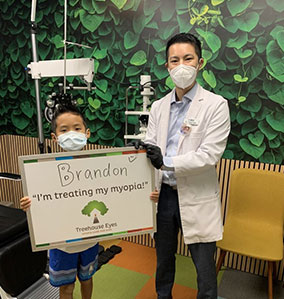
Myopia management uses proven treatments to actively slow the rate of eye growth in children. Options include specially designed contact lenses such as MiSight 1 Day and orthokeratology (Ortho-K), myopia control spectacle lenses like Stellest, and low-dose atropine eye drops. Starting treatment early gives your child the best chance of reducing their final prescription and protecting their long-term eye health.

Myopia management

What Is Lazy Eye?

Amblyopia, often called lazy eye, is a condition where one or both eyes do not develop clear vision, even with the correct glasses prescription, because the visual pathway between the eye and brain did not develop properly during childhood.

Ellipse Causes of Amblyopia

Common causes of amblyopia include a significant difference in prescription between the two eyes, high refractive error, strabismus (eye turn), or a congenital cataract. Because amblyopia affects how the brain processes visual information, it is not something that can be seen by looking at your child's eyes from the outside. Many children with amblyopia do not realize they have a problem because they have always seen the world this way.

Ellipse Treatment for Amblyopia

Traditionally, patching the stronger eye was the primary treatment for amblyopia. While patching can be effective, it only addresses one eye at a time and does not teach the two eyes to work together. Vision therapy takes a different approach by training the brain to use both eyes as a team, strengthening the weaker eye's connection to the brain while building binocular vision skills. Research supports vision therapy as an effective treatment, especially when combined with other approaches.

Vision therapy vs patching for amblyopia

What Is Strabismus?

Strabismus is a condition where the eyes do not align properly, one eye may turn inward, outward, upward, or downward while the other eye looks straight ahead.

Ellipse Why Strabismus Needs Attention

Strabismus is more than a cosmetic concern. When the eyes are not aligned, the brain receives two different images and may begin to suppress or ignore the input from the turning eye. Over time, this can lead to amblyopia and a loss of depth perception, which affects coordination and daily activities. The misalignment can be constant or intermittent, and may affect one eye consistently or alternate between both eyes.

Ellipse Treatment for Strabismus

Treatment for strabismus depends on the type and severity of the misalignment. Vision therapy works to improve the brain's ability to coordinate the eyes, strengthen eye alignment, and develop proper binocular vision. In some cases, surgery may be recommended to adjust the eye muscles. Vision therapy can play a valuable role both before and after surgery by helping the brain learn to maintain alignment and use both eyes together effectively.

Can vision therapy help before and

What Is Convergence Insufficiency?

Convergence insufficiency is a common vision condition where the eyes struggle to work together when focusing on something up close, such as reading, writing, or using a tablet.

Ellipse Symptoms of Convergence Insufficiency

Children with convergence insufficiency often experience headaches, eye strain, blurred or double vision while reading, difficulty concentrating, and a tendency to lose their place on the page. These symptoms are frequently mistaken for attention or learning difficulties, and many children are misdiagnosed with ADHD or a learning disability before receiving a proper visual evaluation. Convergence insufficiency is not detected by standard vision screenings or a basic eye chart test.

Ellipse Treatment for Convergence Insufficiency

A comprehensive binocular vision evaluation is needed to identify this condition. The good news is that convergence insufficiency responds very well to treatment. Office-based vision therapy, supported by the Convergence Insufficiency Treatment Trial (CITT), is the most effective approach. Through structured, supervised exercises, vision therapy trains the eyes to converge accurately and sustain comfortable near vision for reading and learning.

Convergence insufficiency

What Are Eye Tracking Problems?

Eye tracking, or oculomotor function, refers to the ability to move the eyes smoothly and accurately from one point to another, essential for reading, copying from the board, and following a ball during sports.

Ellipse Signs of Tracking Problems

Children with tracking problems may skip words or lines while reading, use a finger to keep their place, have difficulty copying from the board, or struggle with reading speed and comprehension. They often appear to be "careless" readers, but the underlying issue is that their eyes are not moving efficiently across the page. Oculomotor dysfunction is not something a child will outgrow, and it is not detected by standard school vision screenings.

Ellipse Treatment for Tracking Problems

A comprehensive visual efficiency evaluation can identify whether your child's eye movement skills are developing appropriately. Vision therapy is highly effective for improving eye tracking abilities. Through targeted exercises, children learn to control their eye movements with greater accuracy and coordination, leading to noticeable improvements in reading fluency, attention during close-up tasks, and overall academic performance.

Oculomotor dysfunction eye tracking disorder

What Is Double Vision?

Double vision, or diplopia, occurs when a child sees two images of a single object instead of one, it can happen with one or both eyes open and may be constant or intermittent.

Ellipse Causes of Double Vision

Double vision in children can result from several causes, including strabismus (eye misalignment), convergence insufficiency, or difficulty coordinating the eyes after a concussion or head injury. In some cases, it signals a problem with how the brain is processing and combining the images from each eye rather than a problem with the eyes themselves. Because children often do not know how to describe what they are seeing, double vision can go undiagnosed for months or even years.

Ellipse Treatment for Double Vision

Warning signs include complaints of "the words are moving," frequent headaches, covering one eye while reading, or a noticeable decline in school performance. A thorough binocular vision evaluation can determine the cause and guide the right treatment plan. Vision therapy helps the brain learn to combine images from both eyes into a single, clear picture, reducing or eliminating double vision over time.

What is double vision

What Is Binocular Vision Dysfunction?

Binocular vision dysfunction occurs when the two eyes are unable to work together as a coordinated team, forcing the brain to constantly struggle to merge the images from each eye into one.

Ellipse Symptoms of BVD

Children with BVD may experience headaches, dizziness, difficulty reading, motion sickness, light sensitivity, and trouble concentrating. Many of these symptoms overlap with conditions like ADHD, anxiety, and learning disabilities, which is why BVD is often overlooked. Your child may be working much harder than their peers just to keep the visual world stable and clear. BVD is not something standard vision screenings or basic eye exams are designed to detect.

Ellipse Treatment for BVD

It requires a detailed binocular vision assessment that evaluates how the eyes align and work together at all distances. Treatment for BVD may include specially prescribed prism lenses to help the eyes align more easily, along with vision therapy to strengthen the brain's ability to coordinate the two eyes. With the right care, children with BVD often see significant improvements in comfort, focus, and learning.

The connection between binocular vision dysfunction

Are You Ready
to Love the Way You See?

Video thumbnail
Scleral Lenses

Scleral Lenses

If you have keratoconus, an irregular cornea, or have been told contacts aren't an option, scleral lenses can change that. Our fellowship-trained optometrists use wavefront-guided technology and anterior segment OCT mapping to design lenses that vault over the cornea, delivering stable, comfortable vision from morning to night. For the most complex cases, our HERO Scleral lens corrects higher-order aberrations, and EyePrintPRO impression-based lenses provide a truly custom fit when nothing else works.

Myopia Control Contacts

Myopia Control Contacts

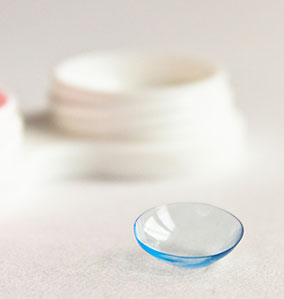
When your child's prescription keeps climbing year after year, standard glasses and contacts only correct the blur without addressing the underlying progression. Myopia control contact lenses like MiSight 1 Day, NaturalVue, and SpecialEyes multifocals are clinically proven to slow the rate of eye growth. Orthokeratology lenses offer another proven path, reshaping the cornea overnight while also slowing progression. Together, these approaches protect your child's long-term eye health while keeping their vision sharp today.

Custom Hard Lenses

Custom Hard Lenses

When soft contacts and glasses fall short, custom hard lenses provide options designed around your exact corneal shape. Custom gas permeable (RGP) lenses are built from topography-based measurements for a precise, stable fit. Hybrid lenses like SynergEyes Duette combine a rigid center for sharp optics with a soft skirt for all-day comfort. Orthokeratology reshapes the cornea overnight so adults and children can enjoy clear, lens-free vision during the day. And for the most challenging fits, EyePrintPRO creates an impression-based lens molded directly from the surface of your eye.

Custom Soft Lenses

Custom Soft Lenses

If your prescription is too strong, your astigmatism is too high, or standard contacts simply won't work, custom soft lenses can bridge the gap. Through our SpecialEyes partnership, we fit prescriptions up to ±25.00D sphere and -8.00D cylinder, custom multifocal designs, and small-diameter pediatric lenses. For keratoconus and corneal irregularities, KeraSoft IC and NovaKone lenses deliver clear, stable vision in a soft lens format. Pinhole soft contact lenses help manage irregular iris conditions and light sensitivity. Every lens comes backed by a Guaranteed Fit Policy.

Contacts for Dry Eye

Contacts for Dry Eye

Dry, irritated eyes don't have to mean giving up on contact lenses. Scleral lenses create a smooth, hydrating layer over the cornea that keeps your eyes comfortable throughout the day. For patients with Sjogren's syndrome, ocular GVHD, post-LASIK dryness, or other chronic conditions, therapeutic scleral lenses can restore both comfort and clarity. If you've struggled with contact lens intolerance or allergic conjunctivitis, scleral lenses offer relief by shielding the corneal surface from environmental irritants.

Pediatric Contact Lenses

Pediatric Contact Lenses

Children of all ages can thrive in contact lenses with the right guidance. We fit small-diameter and high-power lenses for young children, contact lenses for infants with aphakia, and myopia control options like ortho-K and multifocal soft lenses. Whether your child needs scleral lenses for a corneal condition or their very first pair of contacts, every fitting includes hands-on training and confidence-building support so they feel comfortable from day one.

Corneal Conditions

Corneal Conditions and Complex Eyes

When the cornea is damaged, irregular, or surgically altered, standard lenses can't deliver the clarity your eyes need. We design contact lens solutions for keratoconus, pellucid marginal degeneration, corneal ectasia, post-LASIK and post-surgical complications, radial keratotomy cases, corneal dystrophies like Fuchs', corneal burns and injuries, and other complex corneal conditions. Using wavefront aberrometry, corneal tomography, and anterior segment OCT, our optometrists map the unique surface of each eye and build a lens that restores stable, high-definition vision.

Tinted and Prosthetic Lenses

Tinted and Prosthetic Lenses

Custom tinted and prosthetic lenses go well beyond cosmetics. Prosthetic lenses restore a natural appearance for scarred or unusual-looking eyes. Cosmetic tinted lenses correct mismatched eye color for a balanced, confident look. Tinted lenses for color vision deficiency enhance color discrimination in daily life. Performance tints designed for sports like golf and shooting filter specific wavelengths to sharpen contrast. And therapeutic tints reduce light sensitivity for patients recovering from concussion, traumatic brain injury, or other neurological conditions.

We Care for Your Lenses

What Are Your Eyes
Really Telling You?

Rectangle 84 (1)
Frame
Frame
Rectangle 84 (1)
Dr. Thanh Mai, myopia management specialist

The Science Behind Your Child's Myopia

Over 160 peer-reviewed studies on myopia progression, treatment options, and long-term outcomes, all in one searchable, easy-to-understand hub. Whether you're a parent looking for answers or a healthcare provider staying current, explore the data, statistics, and evidence behind today's most effective myopia management strategies. Plus, take our Myopia Risk Assessment to better understand your child's risk profile before your next visit.

Could a Hidden Vision Problem Be Affecting Your Child?

Not every vision problem shows up on a standard eye chart. Struggles with reading, short attention spans, headaches, and avoidance of close-up work can all point to an underlying vision issue that often goes undetected. Our Children's Vision Symptoms Checker, based on the clinically validated Quality of Life Screening Questionnaire from the Optometric Vision Development & Rehabilitation Association (OVDRA), helps you identify patterns in your child's behavior that may signal a vision problem worth exploring with our team.

Portrait of Dr. Nhi Nguyen
Dr. Nathan Schramm, dry eye specialist

Is Dry Eye Behind Your Discomfort?

Burning, grittiness, watery eyes, blurred vision. Dry eye symptoms can affect everything from screen time to sleep. Our Dry Eye Screening is based on the clinically validated Ocular Surface Disease Index (OSDI) and takes just a few minutes to complete. Based on your responses, we'll also share relevant information about treatment options, from in-office procedures like IPL and TearCare to at-home strategies, so you can walk into your appointment informed and ready to have a meaningful conversation with your eye doctor.

Dizziness, Headaches, Neck Pain. Could It Be Your Eyes?

Many people live with symptoms like dizziness, headaches, anxiety, neck pain, and difficulty reading without ever connecting them to their vision. Our Binocular Vision Screening, available in both adult and pediatric versions, is based on the validated BVDQ™ and screens for a subtle vertical eye misalignment known as Vertical Heterophoria (VH), a condition that is frequently overlooked but highly treatable. Rate your symptoms, learn what they might mean, and find out if a binocular vision evaluation could be your next step.

Portrait of Dr. Nhi Nguyen

Patient Feedback


Google Reviews 4.9

Reviews

(485)

Contact Us

  • Monday: 8:00AM - 7:00PM
  • Tuesday: 8:00AM - 7:00PM
  • Wednesday: 8:00AM - 7:00PM
  • Thursday: 9:30AM - 7:00PM
  • Friday: 8:00AM - 7:00PM
  • Weekends: Closed

Reviews

4.9 (485)

The Insight Vision Team

Committed to exceptional eye care and personalized support. From expert doctors to friendly staff, we're here to help you achieve optimal vision health.

960 Dr (164)
Team
960 Dr (168)
960 Dr (183)
Team
Team Member
Team Member
Team Member
Team Member
Team Member
Team Member

Vision Without the Compromise

kids Optical

Kids Optical

Built for Growing Eyes

Pediatric frames, myopia management lenses, and a space kids actually enjoy visiting.

adult optical

Adult Optical

Precision-Fit Lenses

Digital lens design, Varilux progressives, Neurolens, and advanced measurements for your sharpest vision.

contact lenses

Contact Lenses

Beyond Standard Contacts

Scleral lenses, Ortho-K, custom soft lenses, and specialty fits for eyes others can't solve.